
Recently, we asked Clariti users to share what’s actually going on in their content businesses. Not the polished version. The real one.
These are seasoned, full-time creators. People who’ve spent a decade or more building real businesses from their content, managing hundreds (sometimes thousands) of posts along the way. They shared what’s working, what’s no longer delivering, and what they’re trying to figure out. This report captures what we uncovered.
A decade of experience, and the rules just changed
Before getting into what’s happening, it helps to understand who responded, because these are not beginner challenges, and the people navigating them are not beginners.
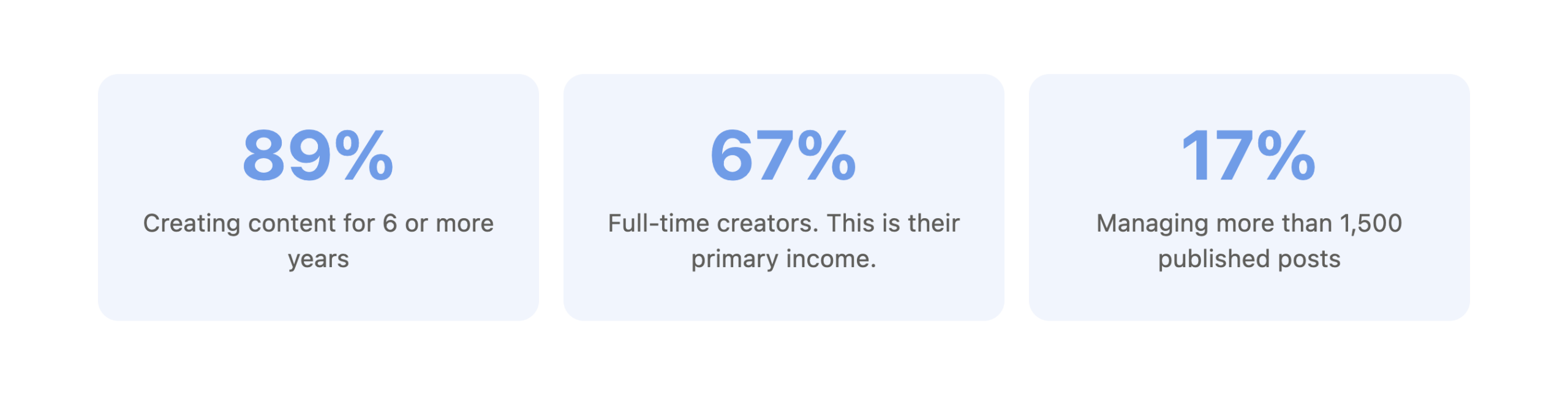
These creators spent years building something real: optimizing for search, publishing consistently, growing traffic and income. For most of them, it worked.
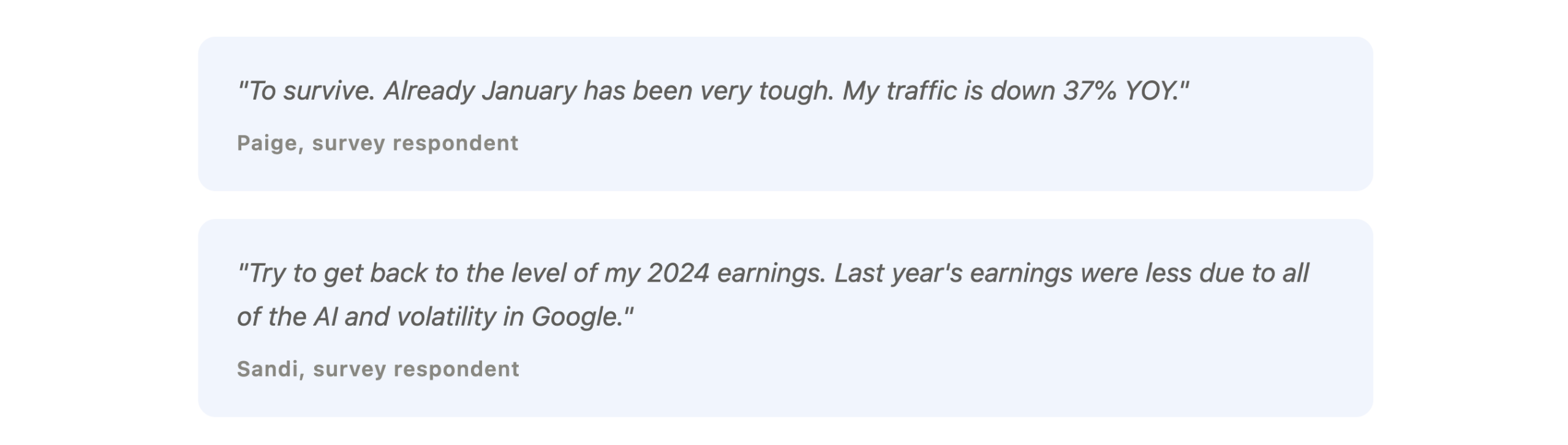
Then, over the past two years, the conditions that made it work started shifting. Google’s Helpful Content Updates, AI overviews competing for the same search real estate, Pinterest volatility. The playbook that built these businesses stopped performing the way it used to.
What came through in the survey wasn’t exactly frustration. It was something closer to disorientation. The work hasn’t changed, but the results have.
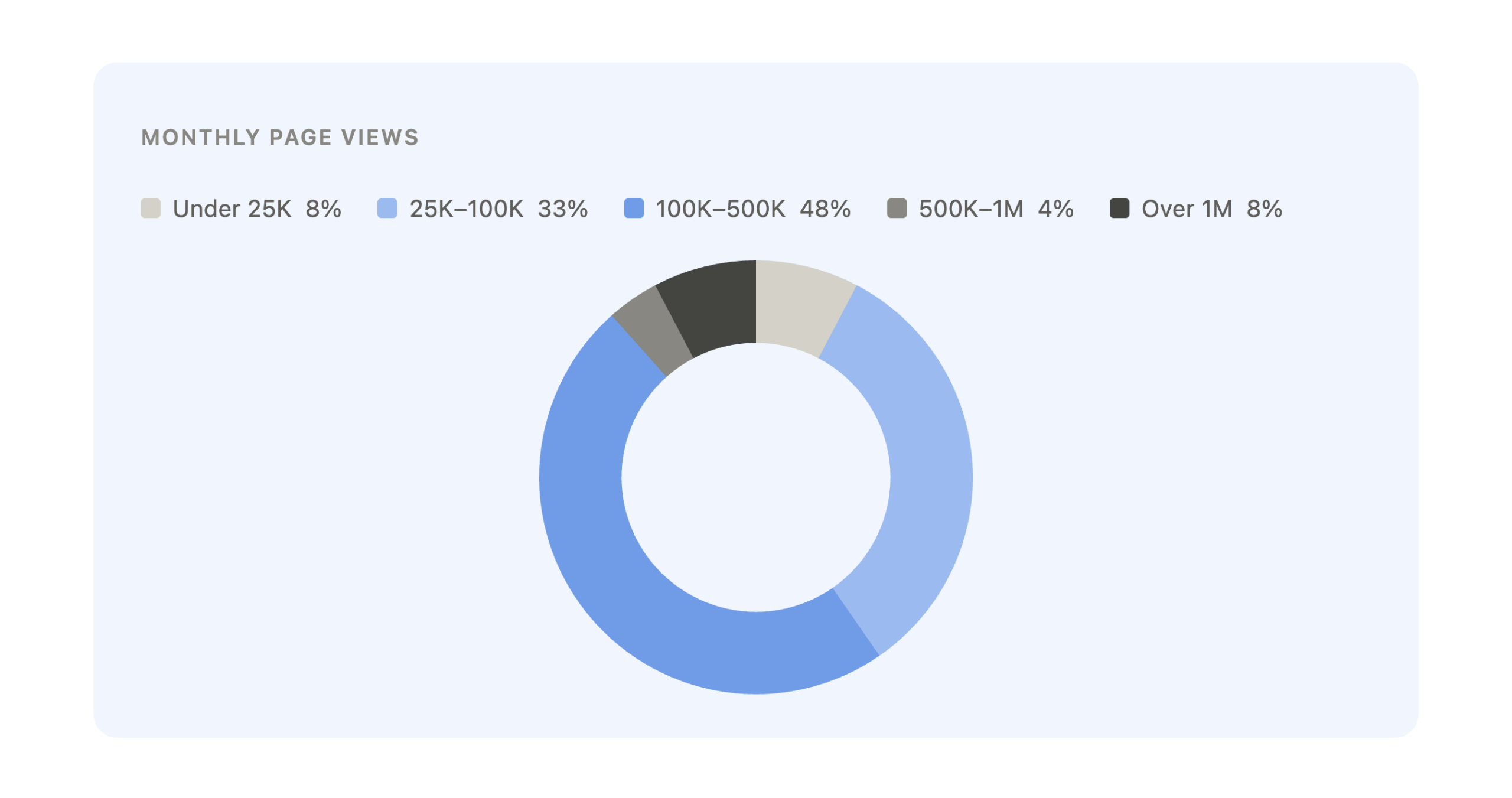
The majority of these creators are operating at meaningful scale. 77% receive more than 100K monthly page views, 48% fall in the 100K–500K range.
These are not small hobby sites. They are real businesses, and most of them have been profitable for years. But the conditions that made them work are shifting, and that instability is showing up directly in how creators are thinking about the year ahead.
The dominant goal for 2026 is getting back to where things were
When we asked creators about their number one goal for 2026, the responses fell into a clear pattern. 23% used explicit survival or maintenance language like “stay relevant,” “stop losing money,” or “not dip below 2025 net.” Another 54% described growth goals, though for many that meant returning to where they were before rather than pushing toward something new.
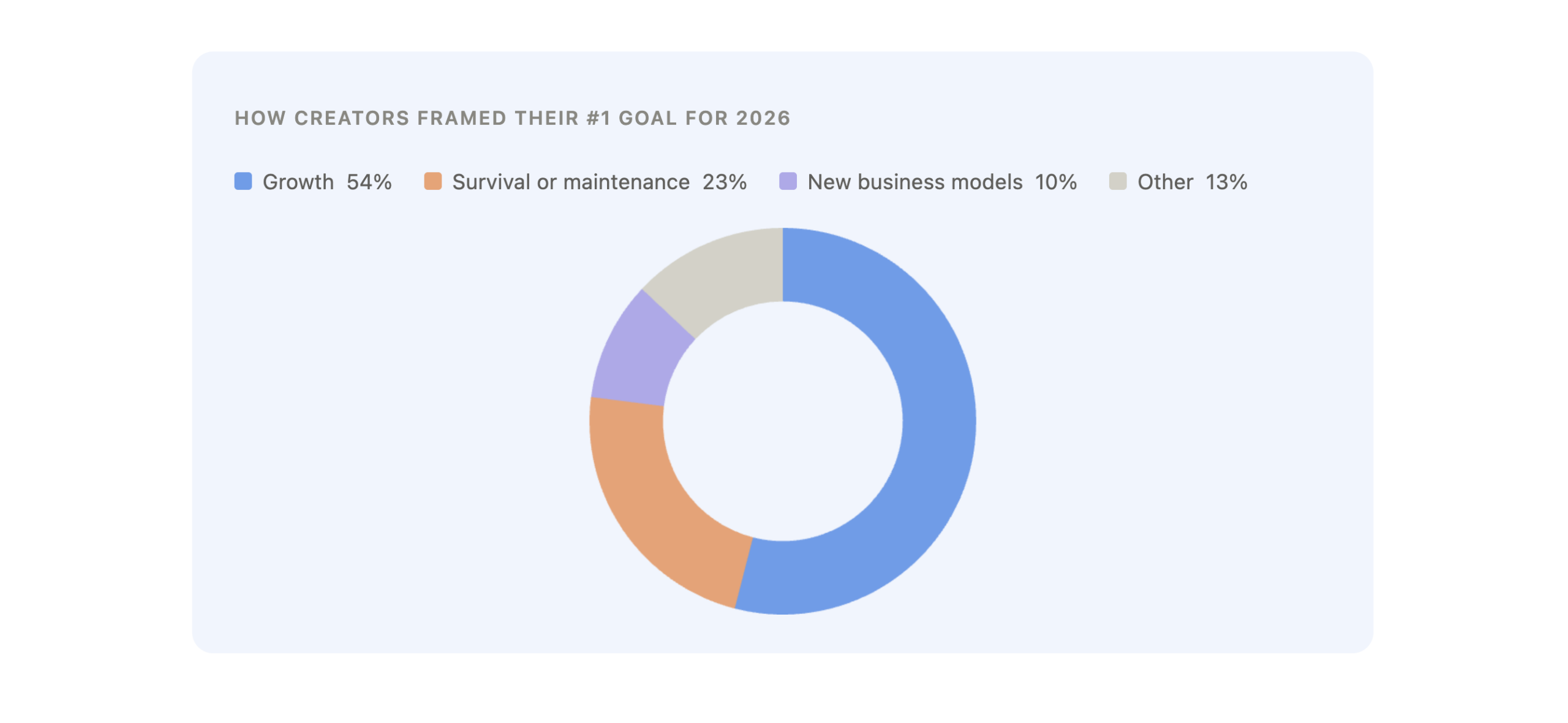
Only 10% expressed goals involving new business models or meaningful diversification. The vast majority are focused on holding ground or recovering what was lost.
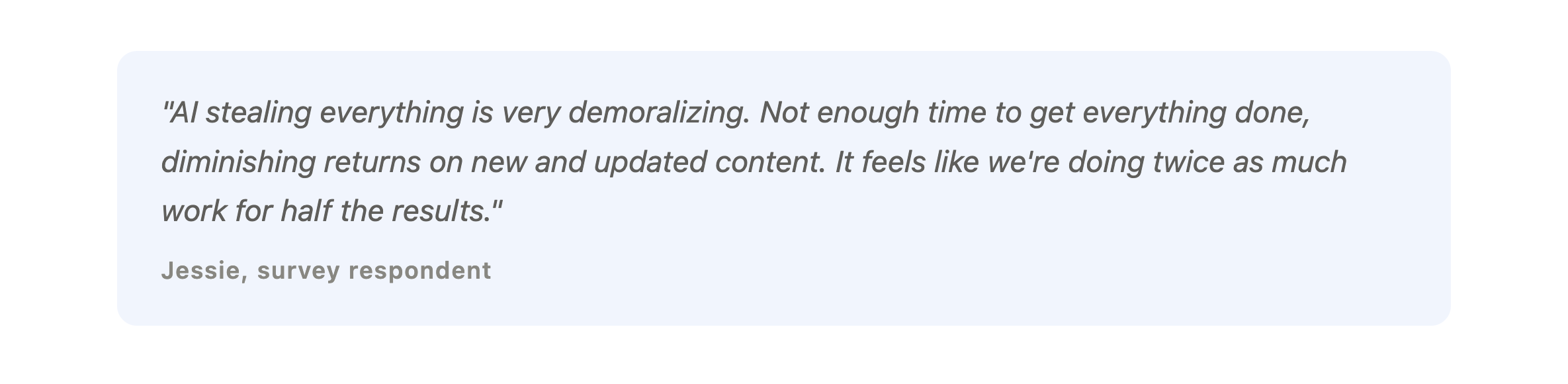
Three forces drove this: Google algorithm updates (multiple creators cited the June and December 2025 core updates as turning points), AI overviews and zero-click search eating into traffic that used to convert, and platform volatility on Pinterest and social happening simultaneously.
Creators are adapting, and most are making the same moves
Despite the difficulty, most creators are not sitting still. They are making real changes to how they work. The most common adaptation, by a wide margin, is a pivot toward email.
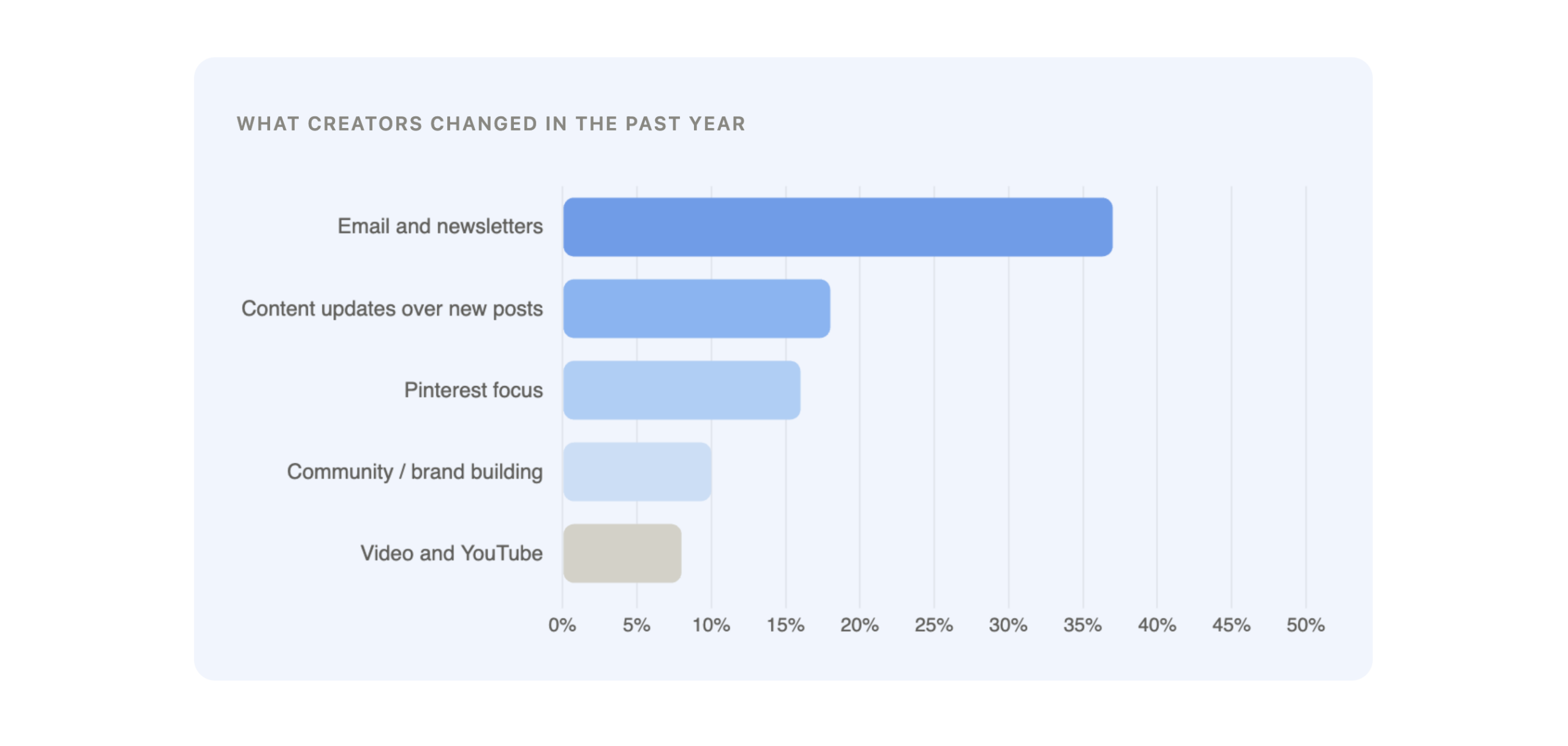
The second most common change is quieter but equally significant: 18% said they’re now prioritizing updating existing content over publishing new posts. This reflects both a practical reality (new content is taking longer to rank and earning less when it does) and a strategic shift in how creators are starting to think about what they already have.
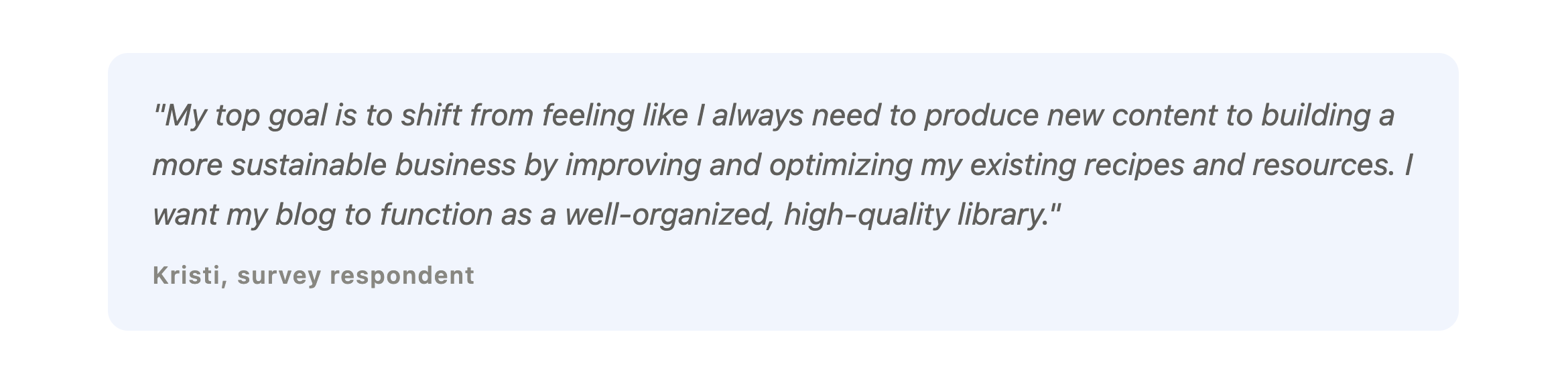
The clearest overall pattern is a retreat toward channels creators own or control: email above everything, and a stepping back from platforms perceived as low-return. Most are making the same moves. But the creators finding solid footing aren’t just choosing different channels. They’re asking different questions altogether.
The creators finding solid footing are asking different questions
Not everyone in this survey described a business under pressure. Some are adapting in ways that go further than tactical pivots, and a pattern emerges in how they talk about their work.
The common thread isn’t a different tactic. It’s a different frame. The creators with the most forward momentum have stopped asking “how do I get more traffic” and started asking “how do I get more value from what I already have.”
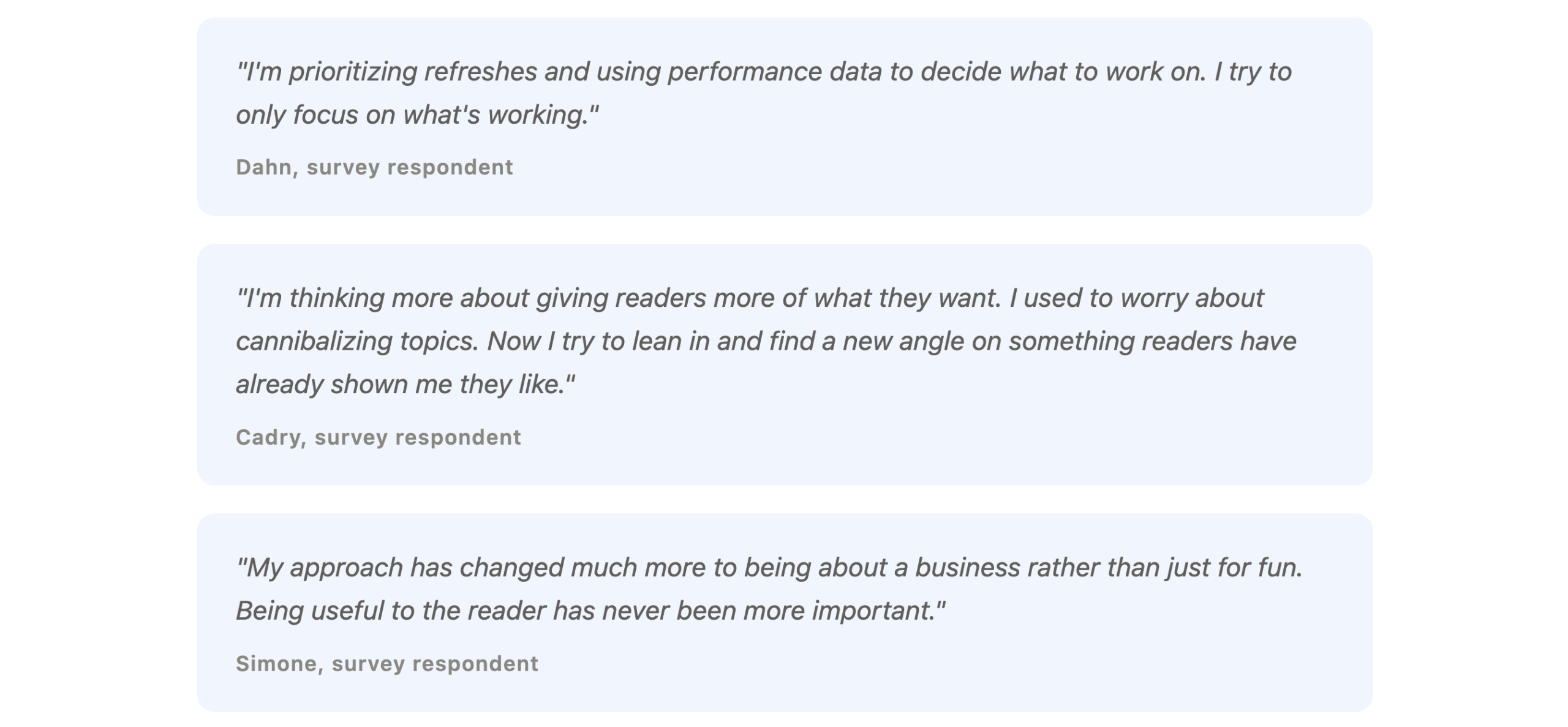
What these creators share is an orientation toward their existing content library as an asset. Something to understand, manage, and optimize rather than a production queue that needs to keep growing. They’re focused on quality of traffic over volume of publishing, on understanding what’s actually working rather than doing more of everything.
That reframe is available to anyone. It doesn’t require a different business model or a platform pivot. It requires clearer signal about what you already have and where the highest-leverage work actually is.
Diversifying traffic is not the same as diversifying revenue
When creators talk about diversifying, they almost always mean diversifying their traffic sources. But the revenue data tells a more specific story. Their revenue model is nearly universal: 98% earn from display advertising (Mediavine, Raptive), with affiliate marketing (56%) and selling products (27%) as secondary streams.
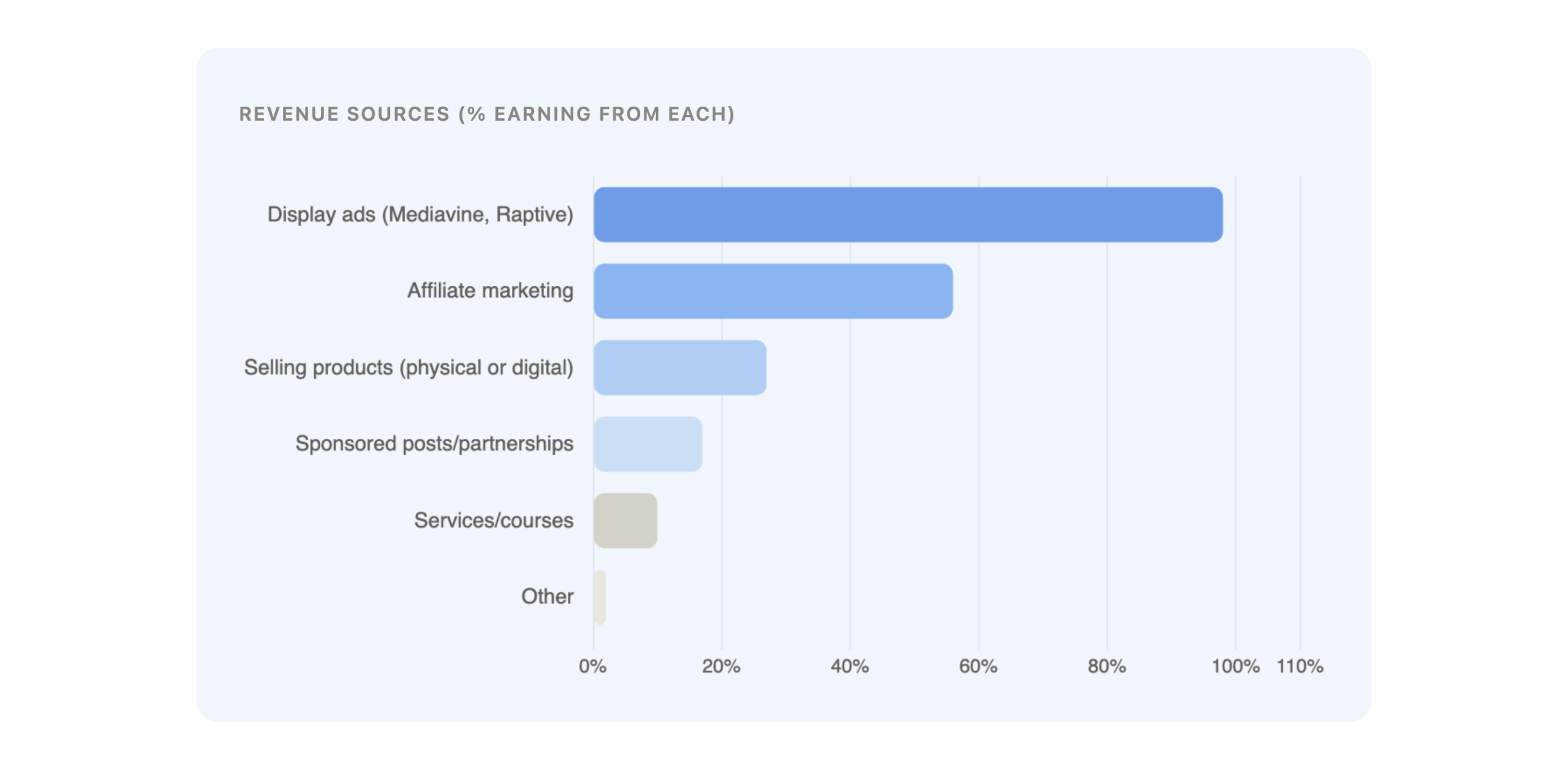
The revenue data surfaces a useful distinction: diversifying where traffic comes from is not the same as diversifying how revenue is made. Both matter. But they’re different problems, and they require different solutions.

The Google dependency is real and creators know it. 54% are actively working to diversify away from Google and another 20% are thinking about it, which means 74% recognize the dependency. What’s less clear is whether diversifying the traffic source also diversifies the underlying business. For most, it doesn’t yet.
What we think comes next
We’ve been sitting with these survey results for a while, and three things keep coming back to us.
1. Email becomes a revenue channel, not just a traffic channel
37% of the creators we surveyed shifted significant effort toward email in the past year. Right now, most are treating it as a way to send readers back to the site to see ads. The shift we expect in 2026 is email becoming a direct revenue channel: a direct line to an audience willing to pay for access, products, or services.
2. The content library becomes the asset, not the publishing stream
18% of creators are already prioritizing content updates over new posts, and we expect that number to grow significantly. For creators with established content libraries, older posts are often quietly outperforming newer ones. 2026 will be the year more creators stop thinking about content as a production queue and start treating their library as a business asset to be managed, maintained, and optimized. The question isn’t what to publish next. It’s what you already have and where the highest-leverage work is.
3. Data clarity becomes a competitive advantage
The clearest dividing line in this survey wasn’t between creators with more traffic and creators with less. It was between creators who know what’s happening in their business and creators who are operating without a clear signal. Knowing which posts are driving revenue, which content is quietly declining, what each traffic source is actually worth. That clarity compounds over time. The creators who build it now will be better positioned for what comes next, regardless of what any platform does.
The thread running through all three is the same: The creators finding solid footing right now aren’t doing something radically different. They’re asking better questions about the business they’ve already built, and acting on them.
Clariti exists to help content creators see the full picture of their business. If you want to see what that looks like with your own data, we’d love to show you.

About the Author
Jen is the Associate General Manager at Clariti with a soft spot for great tech and good snacks. She has a Master’s degree in Human-Computer Interaction (which is a fancy way of saying she’s really into how people and tech get along). When she’s not working, you can usually find her hanging out with her family or baking something she’ll insist is “just a little treat.”